

LP Spotlight introduces you to the operators, investors and industry leaders who make up the Super Angel Network.
Landing a major retail account is a dream for many consumer founders. But paying for the inventory before the retailer pays you? That’s where things get interesting.
More sales can mean more cash tied up in the business. And raising another equity round to fund every new purchase order can get expensive in ownership.
Ben Brachot has built his career around this gap.
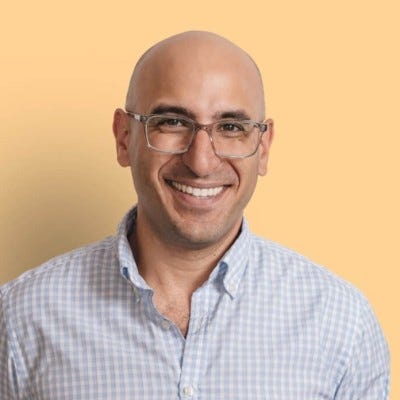
As Co-Founder and Managing Director of Dwight Funding, Ben helps consumer brands finance inventory and growth through asset-based lending: credit backed by assets such as inventory and accounts receivable. Dwight has worked with brands including Goodles, OLIPOP and Dagne Dover, with lines of credit ranging from $1 million to $25 million.
I invest in consumer companies at their earliest stages. Ben often works with them further along, when financing growth becomes a different kind of challenge. That makes his perspective particularly useful to the founders and investors in our network, and it’s one reason I’m glad to have him as an LP in SuperAngel.Fund.
We discuss what he’s learned from working with growing brands, how founders’ ambitions shape their capital decisions, and why he’s back to coding after a 20-year break.
Connect with Ben on LinkedIn and learn more about Dwight Funding.
Here’s my Q&A with Ben 👇
Tell us a little about your background and what you’re focused on today.
Ben: I started my career in startups and finance, where you roll up your sleeves and add value wherever you can. I took that mindset into commercial finance, spending close to a decade at FGI, financing everything from growth-stage brands to large, global companies.
I kept noticing a mismatch. Asset-based lending made a lot of sense for growing companies because it could scale with the business without diluting the founder. But the way it was delivered didn’t match how those companies actually ran.
Around 2015, there was a wave of new eCommerce brands, many of them venture-backed and growing fast. Very few asset-based lenders were working with them, and the reporting required to manage a traditional facility was more than a scrappy, early-stage team could typically take on. Dwight Funding was our answer to that.
Today, we work with emerging and established consumer businesses across CPG, eCommerce, Food and Beverage, and Beauty and Personal Care, pairing our specialized credit team with technology that makes asset-based lending more accessible.
I spend most of my time working with our portfolio founders and the investors who back them. The rest goes into building out Atlas, our technology platform, to make it more useful for our team and the brands we support.
How can a consumer brand have its best sales month ever and still run short of cash?
Ben: Because making a sale and getting paid aren’t always the same event.
Imagine a brand lands its biggest retail order yet. The founder is excited, and understandably so. But the business may need to pay for ingredients, packaging, manufacturing and freight before the product reaches the retailer. Then it has to wait to collect payment.
Meanwhile, it still has payroll, operating expenses and the next production run to fund. The business can be growing while its cash balance is shrinking.
That’s the working-capital gap. When you’re building a physical-product business, you have to think about how much cash it takes to deliver the growth, not just how much revenue that growth creates.
When should a founder consider a line of credit rather than raising more equity?
Ben: Start with what the money needs to accomplish.
If you’re still figuring out whether customers want the product, testing a new channel or building a team ahead of revenue, equity may be the better fit. There’s uncertainty around when that spending will produce a return.
If you have an established business and need to finance inventory or bridge the time between shipping an order and collecting payment, a line of credit may make sense. There’s a more identifiable cycle: buy inventory, sell it, collect cash and repay the borrowing.
Asset-based lending ties borrowing capacity to eligible assets, such as inventory and accounts receivable. As those assets grow, the facility may be able to grow with them.
But non-dilutive doesn’t mean free, and it doesn’t mean risk-free. Debt has costs, terms and repayment obligations. The goal is to match the financing to the job it needs to do.
What’s a financing mistake you’d encourage consumer founders to avoid?
Ben: Waiting until they urgently need cash to start thinking about financing.
A big purchase order can expose a funding gap very quickly. It helps to understand your options before that order arrives, while you have time to compare terms and put the right reporting in place.
I’d also encourage founders to look beyond the headline size of a facility. A $5 million line doesn’t necessarily mean you can draw $5 million on day one. Availability depends on the structure and the assets supporting it.
Ask what you can actually borrow today, how that changes as the business grows, what reporting is required and what happens if inventory moves more slowly or a customer pays late. Those details matter just as much as the interest rate.
What qualities distinguish exceptional founders and business leaders?
Ben: We’ve had the chance to work alongside a lot of great founders, including several who’ve gone on to successfully exit their businesses. A few qualities come up again and again.
They’re involved in every part of the business. They can zoom out to see where the brand is headed and zoom in on the smallest details, often in the same conversation.
They also don’t always pay much attention to how things are usually done in the industry. They think from first principles and build what makes the most sense for their business, even when it looks different from everyone else’s.
What advice would you give an entrepreneur starting a business today?
Ben: Start by deciding what you want the business to look like in two to five years. That picture shapes your strategy, how much capital you raise and what kind, and the key hires you make early on.
A founder who wants to be on shelves nationally in big-box retailers is going to make very different early decisions than one building a lean, profitable DTC business. The inventory requirements, team and financing needs can look very different.
Either way, the calls you make at the start set the tone for your business. It’s much easier to make them with a clear vision in mind.
What motivated you to become an LP in SuperAngel.Fund?
Ben: Early-stage founders are often the first to see where the industry is headed, but we don’t always get to work with them at Dwight.
Our lines of credit range from $1 million to $25 million. We typically start working with brands once they reach roughly $5 million to $10 million in annual revenue.
Being an LP in SuperAngel.Fund is an opportunity to get to know the next generation of founders and support the broader ecosystem much earlier than we otherwise could.
What is your favorite app or tool in your professional or personal life?
Ben: I’d have to say Atlas, Dwight’s operating system, and the AI we’ve built into it.
We tested a number of off-the-shelf agents before deciding to build our own that is trained on our business context and more than 10 years of proprietary data. Our team now uses it for nearly everything, from making more efficient and precise credit decisions to prepping for meetings.
It’s completely transformed how we operate as an organization.
What do you love doing outside of work?
Ben: When I get into something, I tend to go deep. Golf is the big one right now. I picked it up about two years ago and I’m hooked. I try to fit it in whenever I can.
I’ve also gotten back into coding, something I hadn’t touched in 20 years. Safe to say it’s been just as humbling as golf, but a lot of fun.
SuperAngel.Fund is an early-stage venture capital fund led by Ben Zises that invests in Consumer, PropTech, & Future of Work 😇.
Why am I receiving this email?
You’re receiving this because you’re part of the SuperAngel Network: a friend, founder, co-investor, or connection who has expressed interest in receiving updates.
If this isn’t relevant, you can unsubscribe below.
